Agentic Frameworks
Agentic AI will introduce a goal-driven digital workforce that autonomously makes plans and takes actions — an extension of the workforce that doesn't need vacations or other benefits.
-- Gartner
| Framework | Language(s) | License | Key features (short) | Suitable for (pros) | Main cons | GH stars / Deployment model |
|---|---|---|---|---|---|---|
| LangChain | Python, TypeScript | MIT | De-facto standard, broad vendor & vector DB integrations, large ecosystem | Enterprise GenAI building blocks; wide community & vendor compatibility | Complex architecture, steep learning curve, maintenance overhead | ~98K / Self-hosted |
| LangGraph | Python, TypeScript | MIT | Graph-based stateful workflows, multi-agent, native LangChain integration, observability (LangSmith) | Enterprise multi-agent orchestration; LangChain ecosystem apps | Commercial features behind paid tier; dependency complexity | ~8K / SaaS & Self-hosted |
| CrewAI | Python | MIT | Multi-agent workflows, wide LLM support, cloud integration, user-friendly UI | Fast time-to-market; lightweight agent creation for business use cases | Limited enterprise testing; vendor/dependency risks | ~25K / SaaS or Self-hosted |
| Autogen | Python (multi-language) | MIT | Microsoft multi-agent conversational framework, async messaging, observability | Microsoft ecosystem alignment; prototyping with Autogen Studio | Experimental; limited production maturity | ~38K / Self-hosted |
| Semantic Kernel | Python, C#, Java | MIT | Production-ready SDK, multi-language, built-in agent/process frameworks | Enterprise production agents; Azure integration; multi-language SDKs | Vendor dependency; evolving agent features | – / SDK (enterprise) |
| LlamaIndex | Python, TypeScript | MIT | Data-centric indexing framework, connectors, document parsing, modular design | Data-intensive LLM apps, knowledge-heavy systems, rapid TTM | Less focus on agent decision-making; evolving agentic features | ~38K / SaaS & Self-hosted |
| AutoGPT | Python | MIT | Low-code/no-code autonomous agents, multi-LLM support, continuous agents | Quick prototyping, simple autonomous workflows | Waitlists/cloud limits, community fragmentation | ~171K / SaaS & Self-hosted |
| PydanticAI | Python | MIT | Type-safe FastAPI-style framework, strong typing, DI, observability | Type-safe FastAPI-aligned projects and quick prototypes | Early stage, limited production usage | – / Early-stage framework |
| Spring AI | Java / Spring | MIT | LangChain-inspired; native Spring integration, async processing, RAG & Advisors API | Java/Spring enterprise applications, system integration | Newer framework; limited complex-scenario testing | – / Self-hosted (Spring) |
| Haystack | Python | MIT | Production-ready RAG/search pipelines, modular, Hugging Face & Elasticsearch integration | Cross-cloud RAG pipelines, production deployments, LLMOps | Limited multi-agent testing; complex setup | – / Self-hosted & deepsetCloud |
| Agno | Python | MPL-2.0 | Full-stack multi-agent system: memory, knowledge, reasoning, UI; ~2μs agent creation, ~3.75 KiB per agent | Privacy-first and scalable; agent teams & composable workflows; high-performance high-volume operations | Newer ecosystem; limited production proof | ~34K / Self-hosted |
| Mastra | TypeScript | Apache-2.0 | TypeScript-first multi-agent framework; graph-based state machines; integrates with existing REST APIs and web services | Web applications and TypeScript projects; workflow-centric hybrid architectures | Newer framework; TypeScript-only | – / Self-hosted |
| Microsoft Agent Framework | .NET, Python | MIT | Unified SDK for orchestrating AI agents & workflows across .NET/Python | Enterprise production-ready; Microsoft ecosystem integration | Still early-stage; ecosystem tied to Microsoft stack | – / Self-hosted & Azure |
| Strands Agents | Python | Apache-2.0 | Lightweight agent SDK, model-driven, supports workflows & tools | Simple to use; good for orchestration & agent collaboration | Smaller community; limited advanced tooling | – / Self-hosted |
| Google ADK (Agent Development Kit) | Python, Java | Open Source | Modular, model-agnostic agent framework optimized for multi-agent systems | Platform-agnostic; ideal for enterprise or academic adaptation | GCP-heavy; evolving documentation | – / Self-hosted & Cloud |
| OpenAI AgentKit | Various (JS/Python via API) | Proprietary / Mixed | Visual builder, agent orchestration, evaluation, UI embedding | Rapid prototyping; integrated with OpenAI ecosystem | Vendor lock-in; limited low-level control | – / SaaS & Self-hosted |
| Flue | TypeScript | Apache-2.0 | Harness-first agent framework; built-in virtual sandbox (just-bash) + container sandbox (Daytona); sessions, skills, MCP, OpenTelemetry | Headless programmable agents; runtime-agnostic deploy (Node, Cloudflare, CI); harness-centric design | TypeScript-only; experimental; smaller ecosystem | ~3.8K / Self-hosted |
| Eve | Filesystem-defined (markdown + tools) | Open Source | Filesystem-first agent framework; instructions.md defines the agent, tools auto-registered from tools/; built-in durable execution, sandboxed compute, approvals, channels, tracing, evals |
Teams wanting file-based, diffable agent definitions; durable/resumable runs and HITL approvals out of the box | Public preview; API surface may change; strongest tooling fit is Vercel-hosted deployments | – / Public preview |
LangChain
High-level Architecture
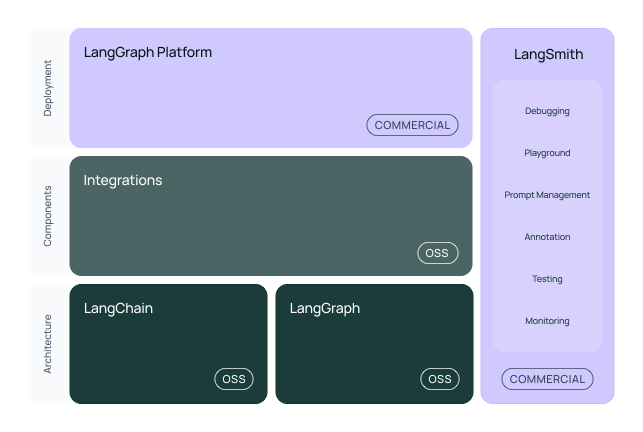
Key Features
- De facto standard for building AI Apps with 1M+ builders and ~100K GitHub Stars
- Comprehensive vendor integration and cloud-vendor support
- Extensive third-party libraries integration
- Support for diverse vector databases
- Wide community knowledge and developer awareness
Suitable for (Pros)
- Enterprise development with wider adoption as standard
- Building foundational blocks of enterprise GenAI applications
- Creating enterprise-specific frameworks
- Projects requiring third-party vendor compatibility
- Applications needing extensive community support
Where other frameworks flare better (Cons)
- Complex architecture with steep learning curve
- Too many integrations leading to code complexity
- Continuous features/changes requiring frequent updates
- Possibility of breaking changes and incompatible libraries
- Maintenance overhead due to extensive ecosystem
LangGraph
High-level Architecture
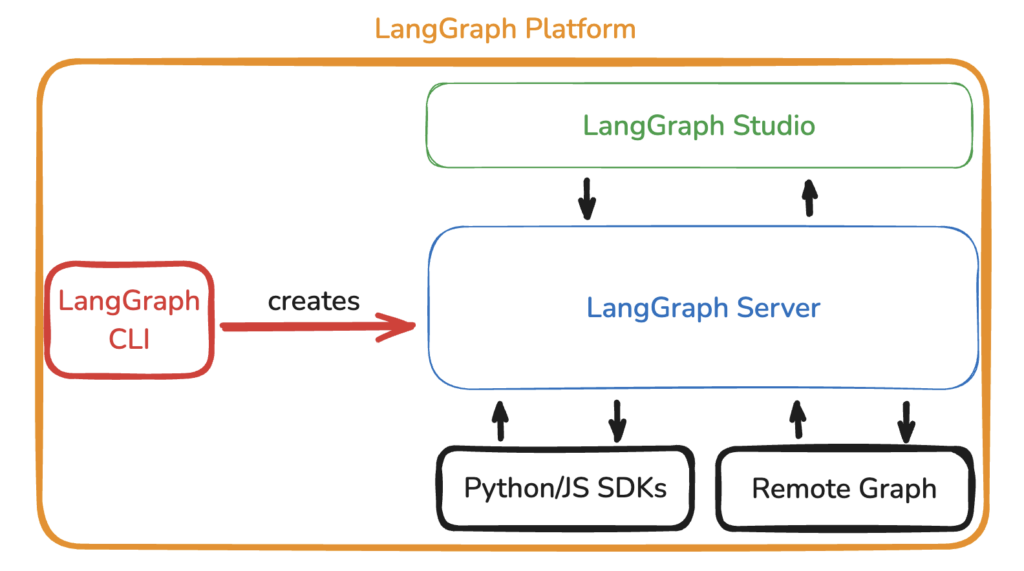
Source: LangGraph Platform Architecture
Key Features
- Open-source framework from LangChain team
- Commercial solution for production deployment
- Stateful design with graph-based workflow
- Multi-agent capabilities
- Native integration with LangChain
- Enhanced observability with LangSmith
- IDE support and community backing
Suitable for (Pros)
- Enterprise multi-agent framework development
- Projects requiring wide compatibility
- Integration with different solutions/products
- LangChain ecosystem applications
- Complex workflow orchestration
Where other frameworks flare better (Cons)
- Enterprise features limited to commercial version
- Complex dependency management
- Framework complexity challenges
- Steep learning curve
- Limited features in open-source version
CrewAI
High-level Architecture
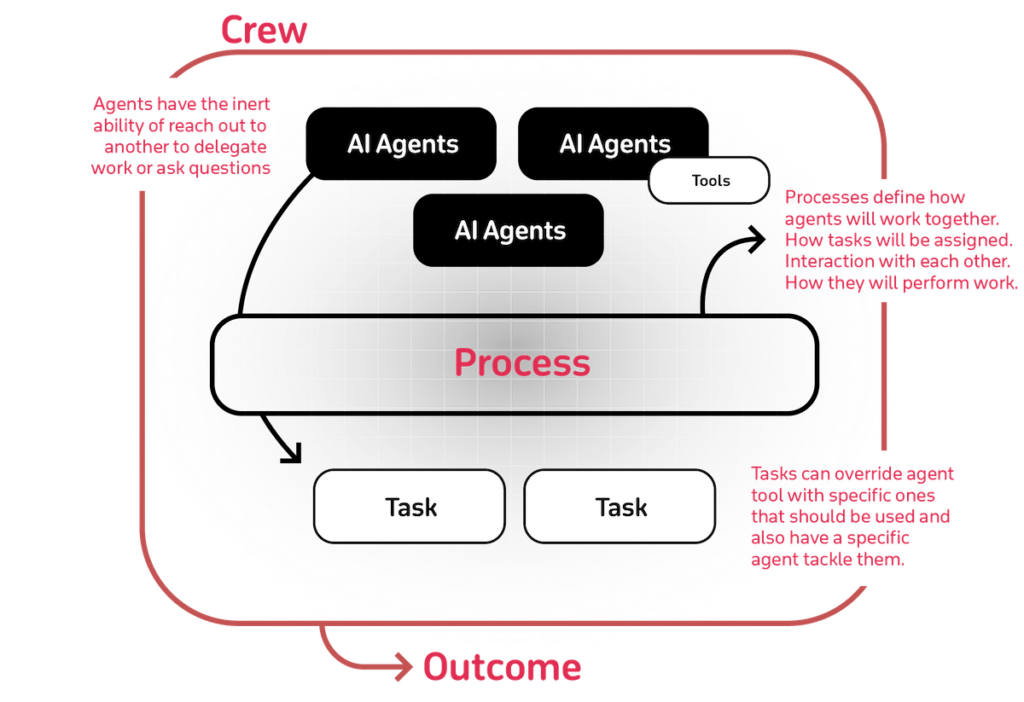 Source: CrewAI Documentation
Key Features
- Multi-agent framework capabilities
- Workflow-based applications
- Wide LLM support
- Cloud provider integration
- Structured workflow design
- User-friendly interface
- Strong community backing
Suitable for (Pros)
- Fast-growing AI ecosystem
- Quick time-to-market needs
- Lightweight agent creation
- Marketing agent development
- Business-friendly implementations
Where other frameworks flare better (Cons)
- Limited enterprise testing
- Complex scenario handling
- Vendor dependency concerns
- Potential acquisition risks
- Data integration challenges
Autogen
High-level Architecture
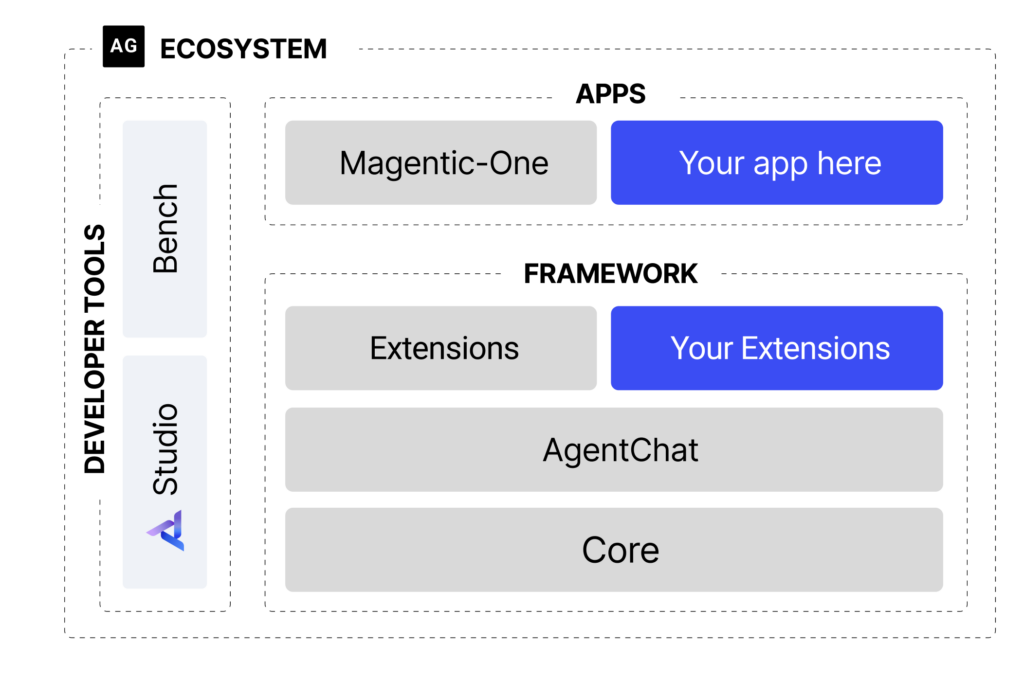
Source: Microsoft Research Documentation
Key Features
- Microsoft-developed programming framework
- Multi-agent conversation framework
- Asynchronous messaging capabilities
- Modular and extensible architecture
- Built-in observability and debugging
- Cross-language support
- Full-type support system
Suitable for (Pros)
- Microsoft ecosystem alignment
- Open-source development projects
- Wide range of application domains
- Prototyping with Autogen studio UI
- Complex agent interactions research
Where other frameworks flare better (Cons)
- Still in experimental phase
- Not fully production-ready
- Microsoft solution dependency
- Complex enterprise setup
- Limited production use cases
Semantic Kernel
High-level Architecture
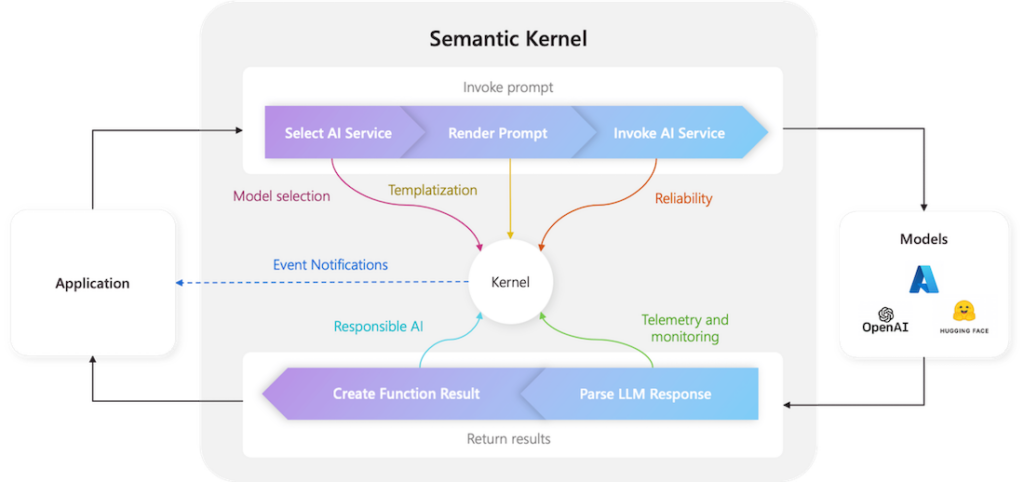
Source: Microsoft Documentation
Key Features
- Production-ready SDK for LLM integration
- Multi-language support (C#, Python, Java)
- Built-in Agent and Process Frameworks
- Strong enterprise integration capabilities
- AI agent creation platform
- Business process optimization tools
Suitable for (Pros)
- Production environment AI agents
- Multi-language SDK requirements
- Microsoft Azure environment integration
- Enterprise-level support needs
- Structured development approaches
Where other frameworks flare better (Cons)
- Limited to SDK functionality
- Evolving agent framework
- Microsoft vendor dependency
- Java agent limitations
- Complex setup requirements
LlamaIndex
High-level Architecture
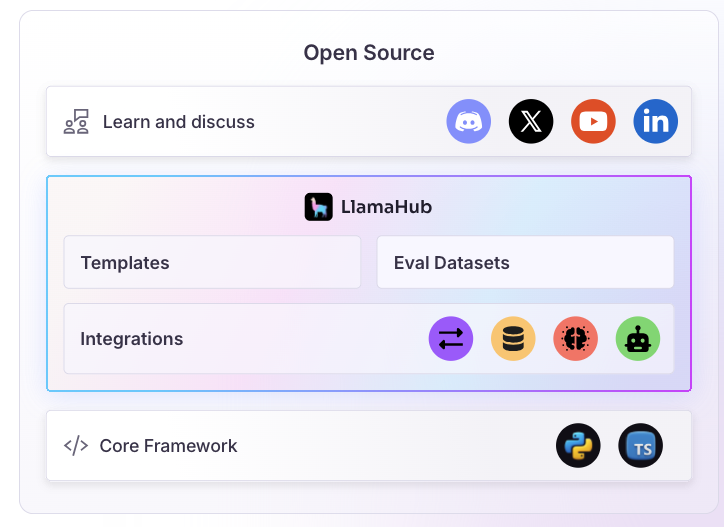
Source: LlamaIndex Framework
Key Features
- Advanced data framework capabilities
- AI agents and document parsing
- Workflow and connector-based integration
- Modular and extensible architecture
- LlamaCloud SaaS offering
- LlamaParse for data transformation
- Centralized LlamaHub for resources
Suitable for (Pros)
- Data-intensive LLM applications
- Complex document parsing needs
- Quick time-to-market requirements
- Knowledge-intensive AI systems
- Chatbots and QA systems
Where other frameworks flare better (Cons)
- Limited complex agent behaviors
- Focus mainly on data indexing
- Less decision-making capabilities
- Evolving agentic features
- Limited enterprise integration
AutoGPT
High-level Architecture
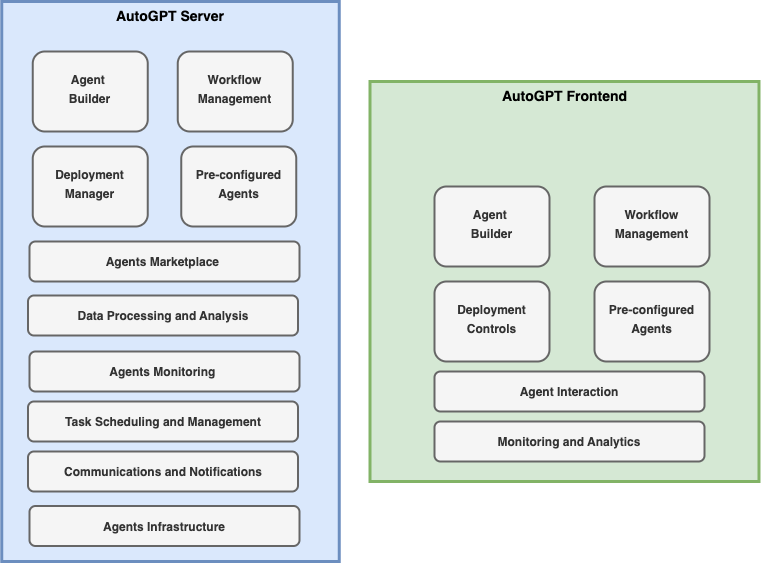
AutoGPT Platform Components
Key Features
- Multiple LLM support (OpenAI, Anthropic, Groq, Llama)
- Seamless integration capabilities
- Low-code workflows
- Autonomous operation
- Continuous agents
- Intelligent automation
- Reliable performance metrics
Suitable for (Pros)
- No-code/low-code development
- Cloud-based agent building
- Automated workflow creation
- Quick prototype development
- Simple agent deployments
Where other frameworks flare better (Cons)
- Vendor lock-in concerns
- Complex licensing structure
- Limited LLM support
- Waitlist-based cloud hosting
- Community support challenges
PydanticAI
High-level Architecture
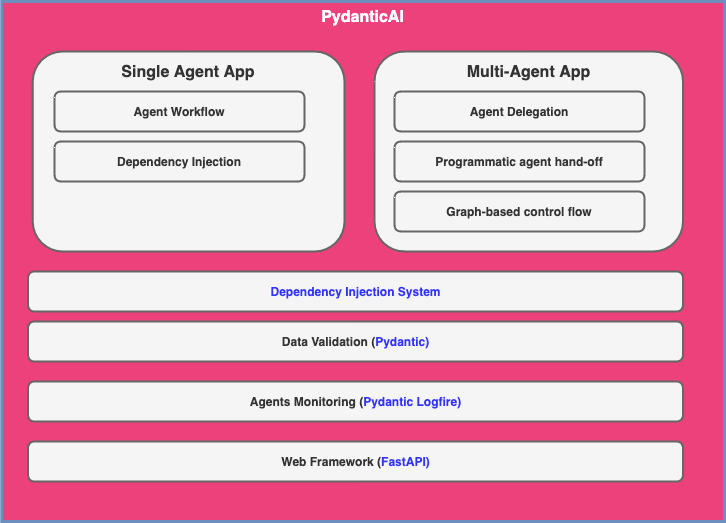
PydanticAI Components
Key Features
- FastAPI-style development
- Pydantic Logfire integration
- Multiple LLM support
- Real-time observability
- Type-safety features
- Graph support
- Dependency injection
Suitable for (Pros)
- Pydantic/FastAPI aligned projects
- Simple framework requirements
- Type-safe development needs
- Basic scenario implementation
- Quick prototyping
Where other frameworks flare better (Cons)
- Beta stage development
- Frequent framework changes
- Limited production testing
- Early stage ecosystem
- Complex integration challenges
Spring AI
High-level Architecture
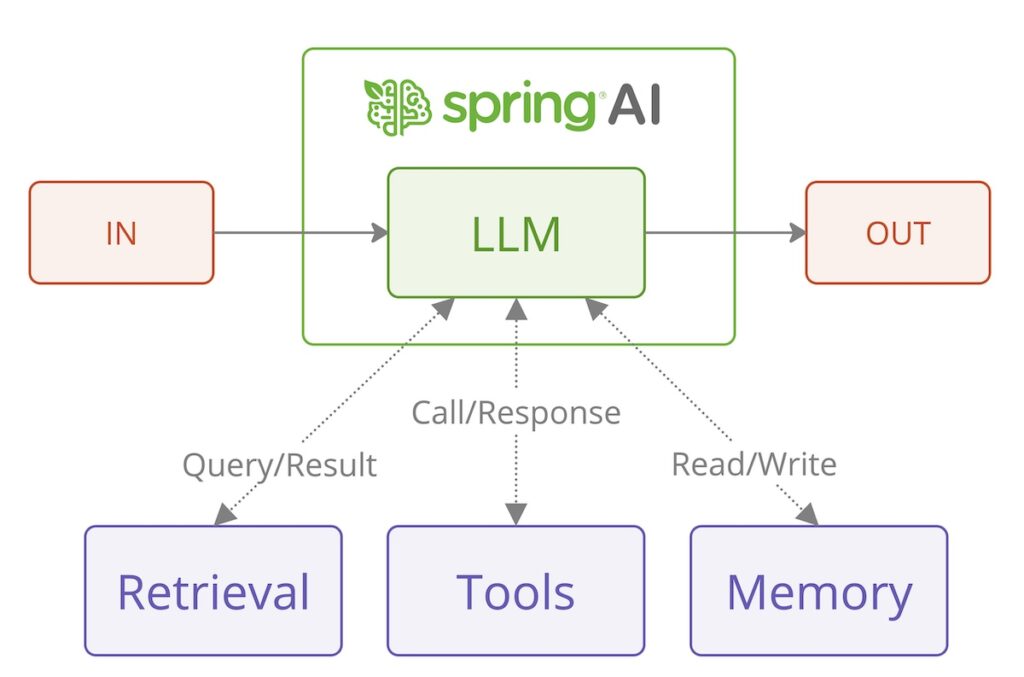
Source: Spring AI Documentation
Key Features
- LangChain-inspired architecture
- Spring ecosystem integration
- Multiple LLM support
- Built-in observability
- Model evaluation tools
- Advisors API for patterns
- RAG capabilities
- Chat conversation support
Suitable for (Pros)
- Spring ecosystem projects
- Java-based enterprise applications
- Seamless Spring integration
- System integration needs
- Asynchronous processing requirements
- Data connectivity projects
Where other frameworks flare better (Cons)
- Relatively new framework
- Limited complex scenario testing
- Early stage development
- Feature comparison gaps
- Limited community resources
Haystack
High-level Architecture
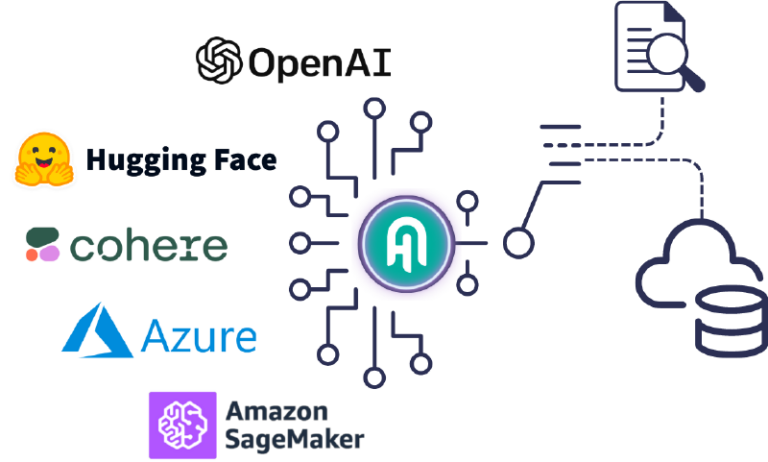
Source: Haystack Documentation
Key Features
- Production-ready LLM framework
- RAG pipeline support
- Complex search capabilities
- Modular architecture
- OpenAI/Chroma integration
- Hugging Face compatibility
- Elasticsearch support
- deepsetCloud platform
Suitable for (Pros)
- Cross-cloud LLM applications
- Custom RAG pipelines
- Jinja template integration
- Free development environment
- LLMOps capabilities
- Production deployments
Where other frameworks flare better (Cons)
- Limited multi-agent testing
- Unclear roadmap visibility
- Battle-testing needed
- Complex setup requirements
- Integration challenges
Other Frameworks/Platforms
- Strands: An open-source agent framework & SDK launched by AWS on July 25 promoting model-driven approach to building and running AI agents .
- Google ADK: Launched by Google on Apr 25 (with a focus on multi-agent apps) as a modular framework for developing and deploying AI agents, particularly optimized for Gemini and the Google ecosystem.
- OpenAI Agents SDK: The OpenAI Agents SDK to build agentic AI apps in a lightweight, easy-to-use package with very few abstractions. It's a production-ready upgrade of our previous experimentation for agents, Swarm.
- Dapr Agents
- OpenAI Swarm: Educational framework for lightweight multi-agent orchestration
- MetaGPT: Research-based multi-agent framework promoting meta-programming
- Flowise: Open-source drag-and-drop UI for agent building
- Langflow: DataStax-acquired framework for interactive GenAI apps
- OpenAGI: Simple framework, built by AI Planet, for building human-like agents
- Camel-AI.org: Research-inspired customizable multi-agent framework inspired by the CAMEL research paper
- PraisonAI: a production-ready Multi AI Agents framework, designed to create AI Agents to automate and solve problems ranging from simple tasks to complex tasks.
- BroadAI: A Multi-Agent Framework for building powerful & intelligent AI Systems
- Vellum: A platform with products for Orchestration, Evaluation, Prompting, Retrieval, and Deployment - as a GUI tool for building and testing complex workflows.
- Rivet: a drag and drop GUI LLM workflow builder
- Solace Agent Mesh: Event-driven multi-agent framework built on the Solace messaging platform
- Akka Agent Platform: Distributed agent platform built on the Akka actor model
- Swarms AI: Choose from multiple swarm architectures to build sophisticated Enterprise AI systems
- IBM Granite BeeAI: Build production-ready AI agents in both Python and Typescript
- MetaGPT: The Multi-Agent Framework: First AI Software Company, Towards Natural Language Programming
Additional Resources
Large Foundation Models for Enterprises
- Liquid AI: LFMs (Liquid Foundation Models) for Enterprises
Comparative Analysis
| Key Attributes | LangChain | LangGraph | Autogen | Semantic Kernel | LlamaIndex | AutoGPT | CrewAI |
|---|---|---|---|---|---|---|---|
| License | MIT | MIT | MIT | MIT | MIT | MIT | MIT |
| Open-source | Yes | Yes | Yes | Yes | Yes | Yes | Yes |
| Developed by | LangChain | LangChain | Microsoft | Microsoft | LlamaIndex | Significant Gravitas | CrewAI |
| GitHub Stars (Jan '25) | 98K | 8K | 38K | - | 38K | 171K | 25K |
| Used By (GH Public Repos) | 170K | 10K | 3K | - | 16K | N/A | 7K |
| Language | Python, TypeScript | Python, TypeScript | Python, C# | Python, C#, Java | Python, TypeScript | Python | Python |
| Enterprise Support | Yes | Yes | Yes | - | Yes | Yes | Yes |
| Deployment Model | Self-hosted | SaaS & Self-hosted | Self-hosted | - | SaaS & Self-hosted | SaaS & Self-hosted | SaaS & Self-hosted |