Agents Marketplace
Overview
The agents marketplace ecosystem represents a rapidly growing segment of the AI industry, providing organizations with access to pre-built AI agents, operational tools, and specialized solutions. These marketplaces serve as central hubs for discovering, evaluating, and deploying AI agent capabilities across various business domains and use cases.
Marketplace Ecosystem
The agents marketplace landscape includes several key platforms, each with distinct focuses and capabilities:
Platform-Specific Marketplaces
- AWS AI Agents Marketplace: Comprehensive platform for enterprise AI agent solutions
- Google Cloud Agent Gallery: Partner-built agents embedded in the Gemini Enterprise app; 50+ certified partners, A2A protocol, two-step IT governance
- Anthropic / Claude Ecosystem: Claude models distributed via AWS Bedrock, Google Vertex AI, and Azure AI Foundry; MCP open ecosystem as de-facto tool marketplace
- AgentOps Marketplace: Specialized focus on operational tools and monitoring solutions
- Platform-Native Stores: Integrated marketplaces within major cloud and AI platforms
Community and Open Source
- Agentic Era: Curated collection of community-driven agent solutions
- Open Source Repositories: GitHub and other platforms hosting agent projects
- Developer Communities: Forums and communities sharing agent implementations
Key Marketplace Categories
Business Process Automation
- Workflow Agents: Automated business process execution
- Document Processing: Intelligent document analysis and extraction
- Data Integration: Automated data pipeline and ETL agents
- Compliance Monitoring: Regulatory compliance and audit automation
Customer Experience
- Conversational Agents: Advanced chatbots and virtual assistants
- Support Automation: Intelligent customer service solutions
- Personalization: Customer experience optimization agents
- Sentiment Analysis: Customer feedback and sentiment monitoring
Development and Operations
- Code Generation: AI-powered development assistance
- Testing Automation: Intelligent testing and QA solutions
- Infrastructure Management: Automated infrastructure optimization
- Monitoring and Observability: Operational monitoring and analytics
Analytics and Intelligence
- Business Intelligence: Automated reporting and insights
- Predictive Analytics: Forecasting and trend analysis
- Anomaly Detection: Intelligent monitoring and alerting
- Performance Optimization: System and process optimization
Marketplace Benefits
For Organizations
- Accelerated Implementation: Faster time-to-value with pre-built solutions
- Reduced Development Costs: Avoid building from scratch
- Proven Solutions: Access to tested and validated agent capabilities
- Vendor Support: Professional support and maintenance
- Scalability: Enterprise-grade solutions designed for scale
For Solution Providers
- Market Access: Reach broader customer base through marketplace platforms
- Revenue Opportunities: Monetize AI agent innovations and expertise
- Distribution Infrastructure: Leverage marketplace infrastructure and support
- Marketing Exposure: Increased visibility within ecosystem
- Customer Feedback: Direct access to user feedback and requirements
Selection Criteria
Technical Considerations
- Integration Capabilities: Compatibility with existing systems and platforms
- Scalability: Ability to handle enterprise-scale deployments
- Performance: Response times, accuracy, and reliability metrics
- Security: Comprehensive security controls and compliance features
- Customization: Flexibility to adapt to specific requirements
Business Considerations
- Total Cost of Ownership: Including licensing, infrastructure, and support costs
- Vendor Stability: Financial stability and long-term viability of solution provider
- Support Quality: Availability and quality of technical support
- Documentation: Completeness and quality of documentation and training materials
- Community: Size and activity of user community and ecosystem
Operational Considerations
- Deployment Complexity: Ease of implementation and configuration
- Maintenance Requirements: Ongoing maintenance and update needs
- Monitoring Capabilities: Built-in monitoring and observability features
- Backup and Recovery: Data protection and disaster recovery capabilities
- Compliance: Regulatory compliance and audit capabilities
Emerging Trends
Market Evolution
- Specialization: Increasing focus on industry-specific and use-case-specific agents
- Integration: Better integration capabilities and standardized interfaces
- Composability: Modular agents that can be combined for complex workflows
- Intelligence: More sophisticated reasoning and decision-making capabilities
Technology Trends
- Multi-Modal Capabilities: Agents that can process text, images, audio, and video
- Real-Time Processing: Faster response times and real-time decision making
- Edge Deployment: Agents optimized for edge computing environments
- Federated Learning: Agents that can learn and improve while preserving privacy
Business Model Innovation
- Outcome-Based Pricing: Pricing based on business outcomes rather than usage
- Agent-as-a-Service: Fully managed agent services with SLA guarantees
- Marketplace Ecosystems: Integrated ecosystems of complementary solutions
- Community Marketplaces: User-generated and community-driven agent solutions
Getting Started
For Buyers
- Define Requirements: Clearly articulate use cases and success criteria
- Market Research: Explore available solutions across different marketplaces
- Proof of Concept: Implement pilot projects to validate solution fit
- Vendor Evaluation: Assess vendor capabilities, support, and roadmap
- Implementation Planning: Develop comprehensive implementation and rollout plans
For Sellers
- Market Analysis: Understand market needs and competitive landscape
- Solution Development: Build marketplace-ready solutions with proper documentation
- Platform Selection: Choose appropriate marketplace platforms for target audience
- Go-to-Market Strategy: Develop marketing and sales strategies for marketplace success
- Customer Success: Implement support and success programs for marketplace customers
Cross-References
- Section 4: Agent Development Frameworks - Technical foundations for marketplace solutions
- Section 5: Agent Technology Stack - Platform and infrastructure considerations
- Section 11: Agentic AI Security - Security considerations for marketplace solutions
- Section 12: Agent Observability - Monitoring and operational considerations
- Section 16: AI Agents Best Practices - Implementation guidance and best practices
Resources
Major Marketplaces
- AWS AI Agents Marketplace
- Google Cloud Agent Gallery (Gemini Enterprise)
- AgentOps Marketplace
- Agentic Era Curated Agents
Industry Analysis
- Market research reports on AI agent adoption and trends
- Vendor comparison and evaluation frameworks
- ROI and business case development resources
Hyperscalers Catalog
Agents Ecosystem
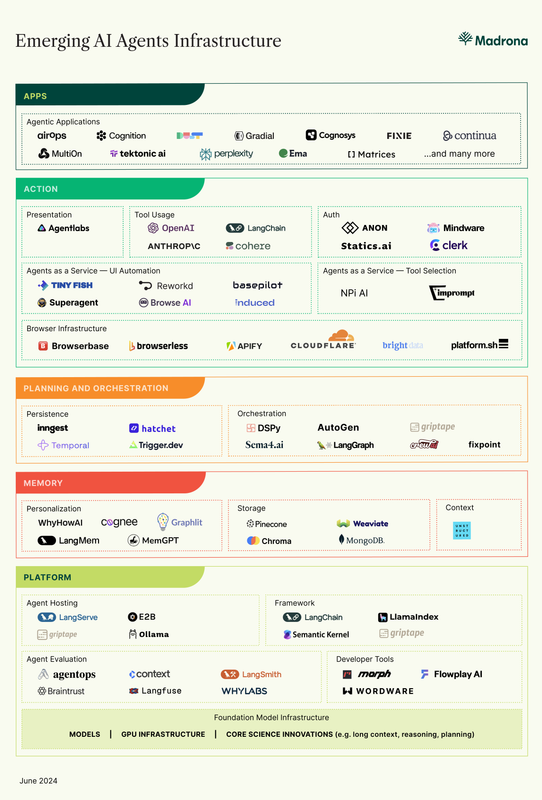
See Also
- Agent Platforms: Platform marketplaces and ecosystems
- Agent Development Frameworks: Framework ecosystems and extensions
- Standards: Standard-compliant marketplace offerings
- Evaluation Frameworks: Evaluating marketplace solutions
- Google Cloud Agents Marketplace: Google Agent Gallery detail
- Anthropic Marketplace Presence: Claude distribution and MCP ecosystem
- AWS AI Agents Marketplace: AWS Marketplace detail