Open Source Workflow Engines (MIT or Apache)
Overview
Open source workflow engines provide the foundation for building scalable, customizable agent orchestration systems. These platforms offer the flexibility of open source licensing (MIT or Apache) while providing enterprise-grade capabilities for agent workflow management.
Major Open Source Platforms
Flowise
Repository: FlowiseAI/Flowise
License: MIT License
Technology Stack: React, NodeJS
Key Features: - Developer-friendly platform for building LLM flows - Particularly strong for chat flow development - Visual drag-and-drop interface - Extensive integration capabilities - Active community development
Architecture: - Frontend: React-based visual flow builder - Backend: NodeJS runtime engine - Database: Support for multiple database backends - Integrations: Extensive third-party service connectors
Use Cases: - Chat application development - Customer service automation - Educational AI applications - Rapid prototyping of conversational agents
Getting Started:
# Installation via npm
npm install -g flowise
npx flowise start

# Or via Docker
docker run -d --name flowise -p 3000:3000 flowiseai/flowise
Flowgram
Platform: Flowgram.ai
Developer: ByteDance
License: Open Source
Key Features: - Node-based flow building engine - Support for both fixed layout and free connection layout modes - Enterprise-grade scalability - Multi-language support - Advanced workflow orchestration capabilities
Architecture Components: - Visual Editor: Drag-and-drop workflow designer - Execution Engine: High-performance workflow runtime - Node Library: Extensive collection of pre-built workflow nodes - Integration Layer: APIs and connectors for external systems
Use Cases: - Complex business process automation - Multi-step agent workflows - Enterprise integration scenarios - Large-scale workflow orchestration
Sim.ai
Repository: simstudioai/sim
License: Open Source
Key Features: - Open-source platform for building and deploying AI agent workflows - Local and cloud hosting options - Integrated vector database capabilities - Comprehensive development environment
Technical Capabilities: - Local Development: Full local development environment - Cloud Deployment: Seamless cloud deployment options - Vector Database: Built-in vector storage and retrieval - Agent Orchestration: Multi-agent workflow coordination
Use Cases: - AI agent development and testing - Vector-based knowledge systems - Hybrid cloud deployments - Research and development projects
Eclipse LMOS
Platform: Eclipse LMOS
License: Eclipse Public License
Technology: Kotlin (with multi-framework support)
Key Features: - Open-source, cloud-native platform for Multi-Agent Systems (MAS) - Started with Kotlin but supports multiple frameworks - Enterprise-grade architecture and scalability - Strong governance and community support through Eclipse Foundation
Architecture:
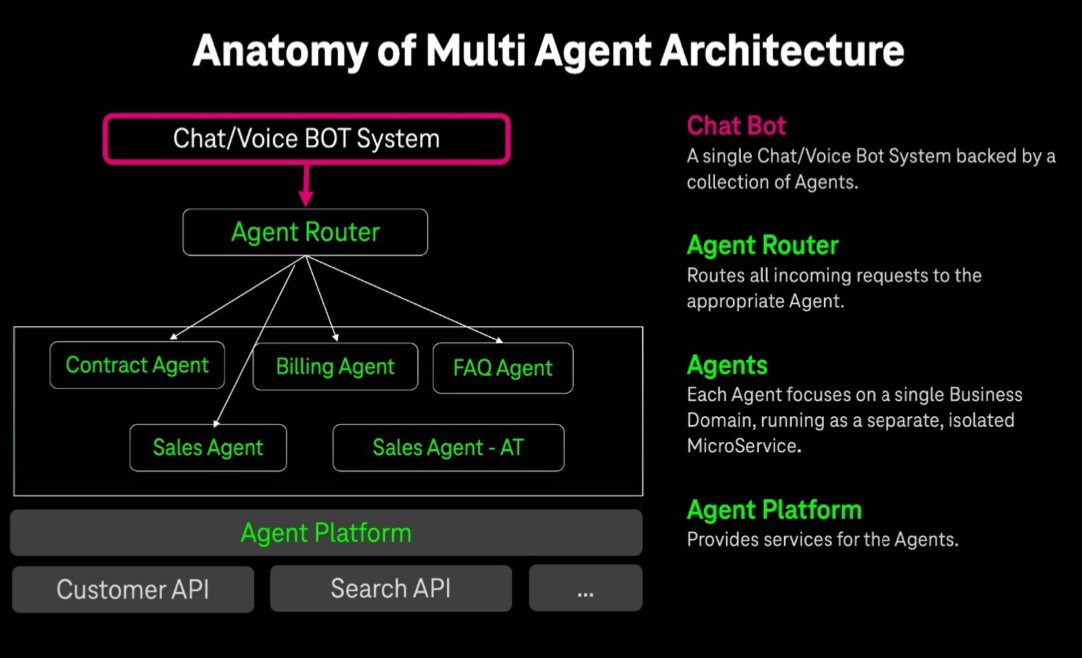
Multi-Agent System Reference Architecture
Technical Components: - Agent Runtime: Cloud-native agent execution environment - Communication Layer: Inter-agent communication protocols - Service Mesh: Microservices-based architecture - Orchestration: Kubernetes-native deployment and scaling
Use Cases: - Enterprise multi-agent systems - Cloud-native agent deployments - Microservices-based agent architectures - Large-scale distributed agent systems
Getting Started: - Documentation: Eclipse LMOS Documentation - Community: Active Eclipse Foundation community - Reference: InfoQ Multi-Agent Systems Guide
ByteChef
Repository: bytechefhq/bytechef
License: Apache-2.0
Technology Stack: Java/Spring Boot backend, React frontend
Key Features: - AI-native, low-code platform unifying workflow automation, API orchestration, and AI agent integration in a single tool - Visual workflow designer alongside code-based workflow definitions for teams that prefer infrastructure-as-code - Built-in connector library for common SaaS APIs, databases, and AI model providers - Self-hostable, with a managed cloud offering also available
Architecture: - Frontend: React-based visual flow designer - Backend: Java/Spring Boot execution engine - Connectors: Pluggable component model for third-party API and AI integrations
Use Cases: - Combining traditional API/SaaS workflow automation with AI agent steps in the same pipeline - Teams wanting an Apache-2.0, self-hostable alternative to closed-source iPaaS tools
Getting Started:
# Self-hosted via Docker Compose
git clone https://github.com/bytechefhq/bytechef
cd bytechef
docker compose up
Comparison Matrix
| Platform | License | Primary Language | Strengths | Best For |
|---|---|---|---|---|
| Flowise | MIT | JavaScript/NodeJS | Chat flows, Visual development | Conversational agents, Rapid prototyping |
| Flowgram | Open Source | Multi-language | Enterprise scale, Flexible layouts | Complex workflows, Enterprise integration |
| Sim.ai | Open Source | Python/JavaScript | Vector DB integration, Hybrid deployment | AI research, Knowledge systems |
| Eclipse LMOS | EPL | Kotlin/Multi | Cloud-native, Enterprise governance | Enterprise MAS, Microservices |
| ByteChef | Apache-2.0 | Java/Spring Boot, React | AI-native, unifies API orchestration + AI agents | Teams combining SaaS automation with AI agent steps |
Technical Considerations
Deployment Options
Local Development: - All platforms support local development environments - Docker containers for consistent development experience - IDE integrations and debugging capabilities - Local testing and simulation environments
Cloud Deployment: - Kubernetes-native deployment options - Container orchestration support - Auto-scaling and load balancing - Multi-region deployment capabilities
Hybrid Approaches: - Development locally, deploy to cloud - Multi-cloud deployment strategies - Edge computing integration - On-premises and cloud hybrid setups
Integration Capabilities
API Integration: - RESTful API support across all platforms - GraphQL support where applicable - Webhook integration for event-driven workflows - Custom connector development capabilities
Database Integration: - SQL and NoSQL database support - Vector database integration (especially Sim.ai) - Real-time data streaming capabilities - Data transformation and processing
Third-party Services: - Cloud service provider integrations - SaaS platform connectors - Authentication and authorization systems - Monitoring and observability tools
Best Practices
Platform Selection
Evaluation Criteria: 1. License Compatibility: Ensure license aligns with your project requirements 2. Community Activity: Active development and community support 3. Technical Requirements: Match platform capabilities with your needs 4. Scalability: Consider current and future scaling requirements 5. Integration Needs: Evaluate integration capabilities with existing systems
Decision Framework: - For Chat Applications: Consider Flowise for rapid development - For Enterprise Workflows: Evaluate Flowgram or Eclipse LMOS - For AI Research: Sim.ai offers strong vector database integration - For Microservices: Eclipse LMOS provides cloud-native architecture
Implementation Strategy
Development Approach: 1. Start with Proof of Concept: Build small prototypes to validate approach 2. Iterative Development: Implement features incrementally 3. Community Engagement: Participate in platform communities 4. Contribution Strategy: Consider contributing back to open source projects 5. Documentation: Maintain comprehensive documentation for your implementations
Operational Considerations: 1. Monitoring: Implement comprehensive monitoring and logging 2. Security: Follow security best practices for open source deployments 3. Updates: Plan for regular platform updates and security patches 4. Backup and Recovery: Implement robust backup and disaster recovery 5. Performance Optimization: Monitor and optimize performance regularly
Community and Support
Community Resources
Documentation and Tutorials: - Official platform documentation - Community-contributed tutorials and guides - Video tutorials and webinars - Best practices and case studies
Community Channels: - GitHub discussions and issues - Discord/Slack community channels - Stack Overflow and technical forums - Regular community meetings and events
Contribution Opportunities: - Bug reports and feature requests - Code contributions and pull requests - Documentation improvements - Community support and mentoring
See Also
- Agent Development Frameworks
- Self-hosted & Limited Open Source Workflow Engines
- Workflow Orchestration
- Agentic AI Industry Standards
- Observability
References
- ByteChef GitHub — AI-native, low-code workflow automation, API orchestration, and AI agent integration platform; Apache-2.0