AI Automation Reference Architecture
Overview
AI Automation frameworks provide the foundation for building sophisticated multi-agent systems that can handle complex, multi-step workflows with minimal human intervention. These frameworks combine language models with specialized tools for tasks like web search, crawling, and code execution while maintaining community-driven development principles.
LangManus - AI Automation Framework
Architecture Overview
LangManus is a community-driven AI automation framework that builds upon the incredible work of the open source community. The goal is to combine language models with specialized tools for tasks like web search, crawling, and Python code execution, while giving back to the community that made this possible.
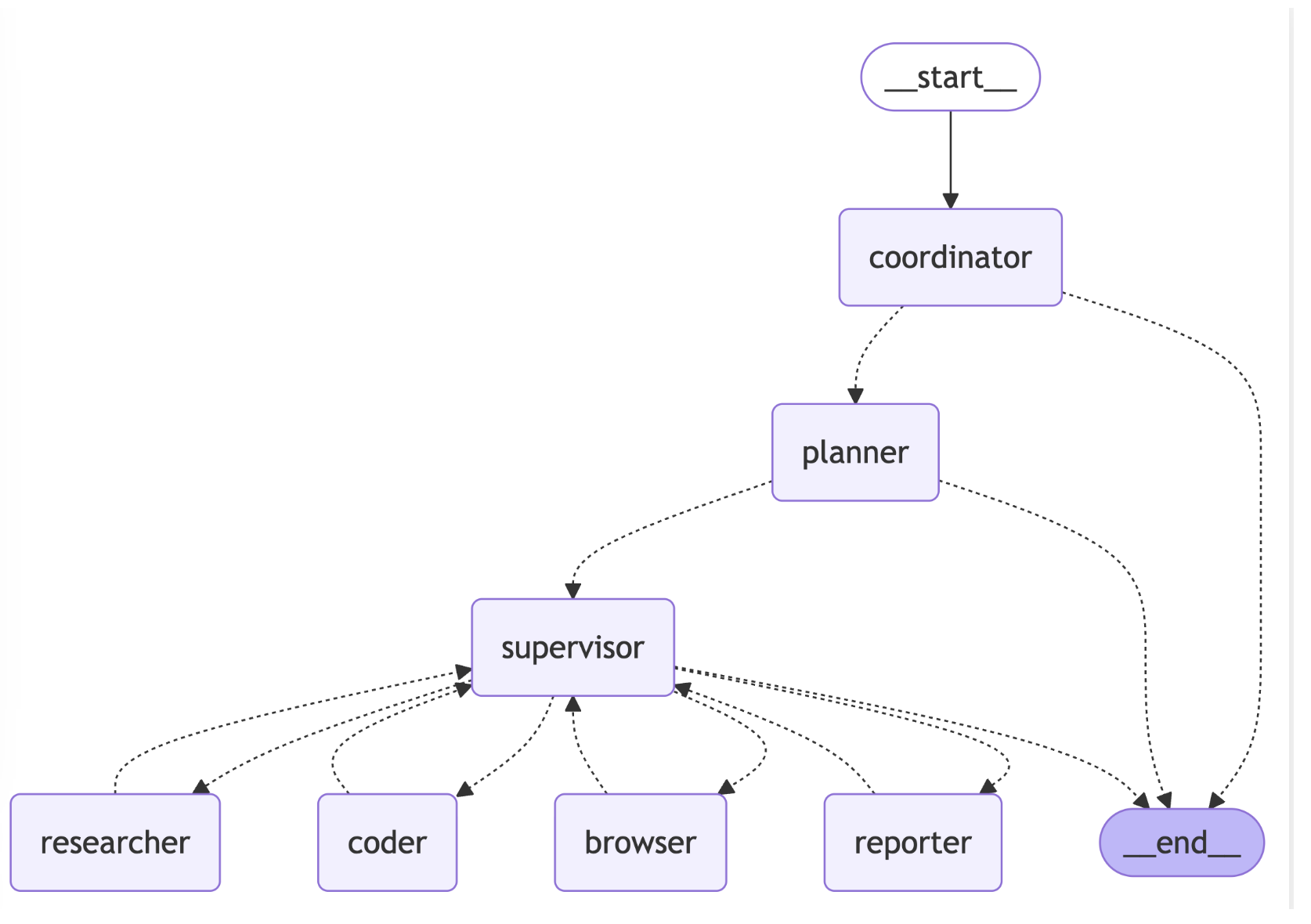
Architecture Reference: Hierarchical multi-agent system
Key Components
1. Hierarchical Agent Structure
- Coordinator Agents: High-level planning and task decomposition
- Specialist Agents: Domain-specific task execution
- Tool Agents: Interface with external systems and APIs
2. Communication Layer
- Inter-Agent Messaging: Standardized communication protocols
- State Synchronization: Shared state management across agents
- Event Broadcasting: Real-time coordination mechanisms
3. Tool Integration
- Web Search Capabilities: Intelligent information retrieval
- Web Crawling: Automated data collection and processing
- Code Execution: Python runtime environment for dynamic tasks
- API Integration: Seamless connection to external services
4. Memory and Context Management
- Shared Memory: Cross-agent information sharing
- Context Preservation: Maintaining workflow state
- Learning Integration: Continuous improvement mechanisms
Implementation Patterns
Multi-Agent Coordination
Coordinator Agent:
  - Task decomposition and planning
  - Resource allocation and scheduling
  - Progress monitoring and coordination
  - Error handling and recovery

Specialist Agents:
  - Domain-specific expertise
  - Tool utilization and execution
  - Result validation and reporting
  - Feedback to coordinator

Tool Agents:
  - External system interfaces
  - Data transformation and processing
  - Security and access control
  - Performance optimization
Workflow Orchestration
- Task Reception: Coordinator receives high-level objectives
- Decomposition: Break down complex tasks into manageable subtasks
- Agent Assignment: Allocate subtasks to appropriate specialist agents
- Execution Monitoring: Track progress and handle dependencies
- Result Aggregation: Combine outputs into coherent final results
- Quality Assurance: Validate results and ensure objectives are met
Use Cases
Enterprise Automation
- Document Processing: Automated analysis and extraction workflows
- Data Integration: Multi-source data collection and harmonization
- Report Generation: Automated business intelligence and reporting
- Compliance Monitoring: Continuous regulatory compliance checking
Research and Development
- Literature Review: Automated research paper analysis and summarization
- Competitive Analysis: Market research and competitor monitoring
- Patent Research: Prior art search and analysis automation
- Technical Documentation: Automated documentation generation
Operations and Maintenance
- System Monitoring: Automated infrastructure health checking
- Incident Response: Automated troubleshooting and resolution
- Deployment Automation: Continuous integration and deployment
- Performance Optimization: Automated system tuning and optimization
Technical Specifications
Framework Requirements
- Language Models: Support for multiple LLM providers
- Tool Integration: Extensible tool registry and management
- Scalability: Horizontal scaling for high-throughput scenarios
- Reliability: Fault tolerance and recovery mechanisms
Security Considerations
- Access Control: Role-based permissions for agent operations
- Data Protection: Encryption and secure data handling
- Audit Logging: Comprehensive activity tracking
- Sandboxing: Isolated execution environments for safety
Getting Started
Basic Setup
- Environment Preparation: Set up Python environment and dependencies
- Configuration: Define agent roles and tool integrations
- Workflow Design: Create task decomposition patterns
- Testing: Validate agent coordination and tool functionality
- Deployment: Scale to production environment
Best Practices
- Modular Design: Keep agents focused on specific domains
- Error Handling: Implement robust error recovery mechanisms
- Monitoring: Set up comprehensive observability
- Documentation: Maintain clear workflow documentation
- Community Engagement: Contribute back to open source ecosystem
Resources
- GitHub Repository: LangManus Framework
- Documentation: Comprehensive setup and usage guides
- Community: Active developer community and support channels
- Examples: Reference implementations and use case templates
Related Patterns
- Self-Learning Agents: For agents that evolve autonomously
- Multi-Agent Systems: Advanced coordination patterns
- Agent Development Frameworks: Framework integration patterns